
- WROP receives grants with community matching funds.
- Thanks to our 100+ community supporters.
- WROP to partner with ORP for reef monitoring.
- Every $1000 raised plants more than 300,000 oysters.
Wye River OYSTER ProgramRestoring oyster reefs in the Wye River
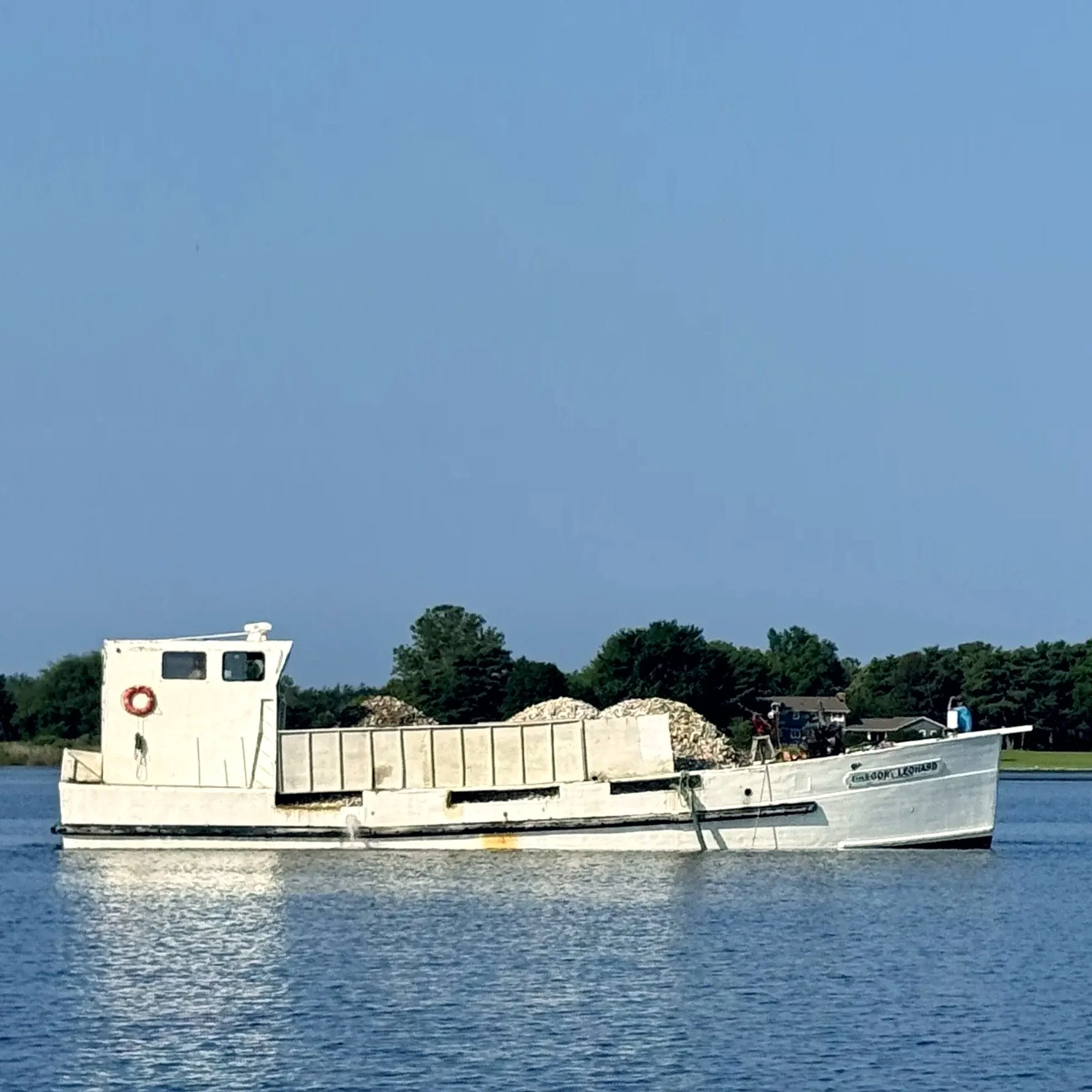
Our mission is to restore thriving oyster reefs in the Wye River sanctuary, improving water quality and habitat for generations to come. Neighbors and restoration partners are making that work possible.
Our Impact
From Community Effort to a Healthier River
The Wye River Oyster Program is a community-driven effort to restore oyster reefs, improve water quality and build a stronger, more resilient ecosystem for generations to come.
From Concern
A community
launches the program.
To Action
Restoration
gets underway.
To Impact
A cleaner, healthier
river for tomorrow.
WROP PROGRAM MODELHow do we accomplish our mission?
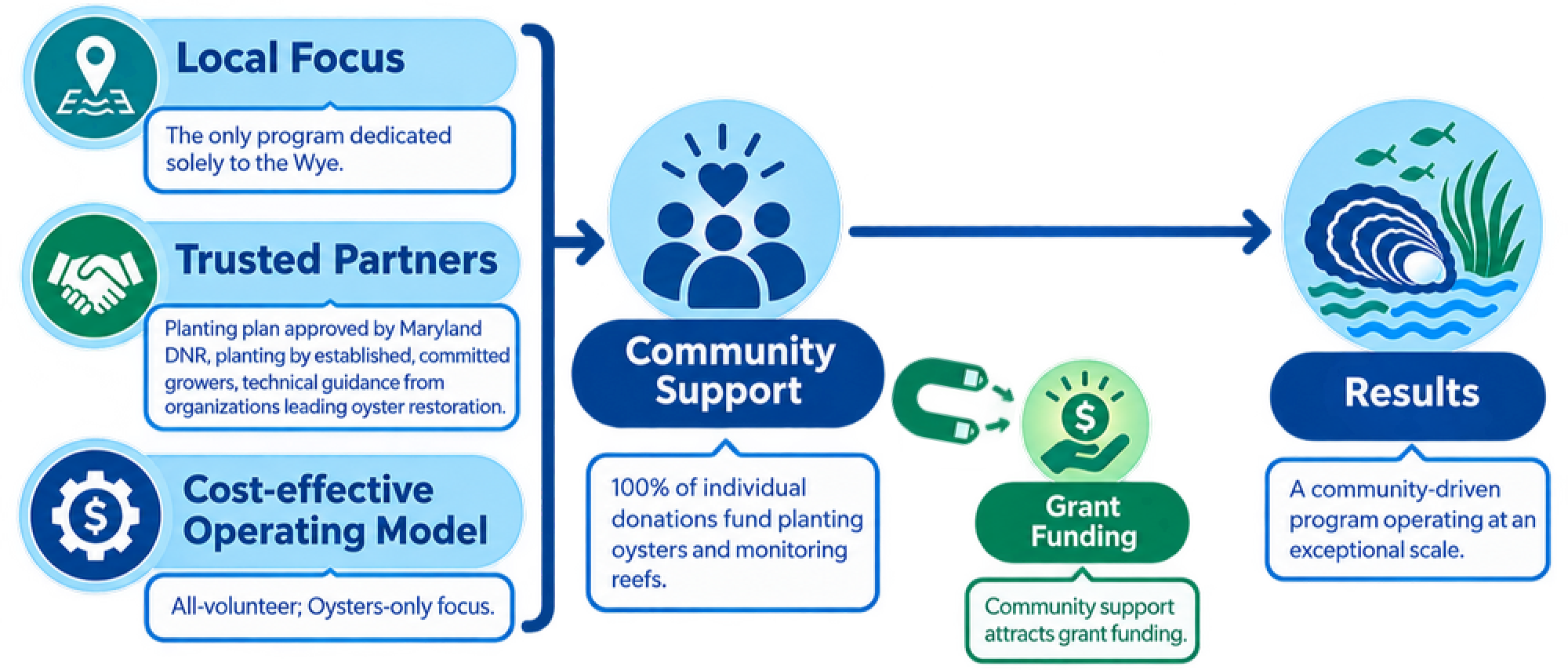
Simple structure. Serious restoration.
One River. One Mission.
Unlike organizations serving multiple waterways and conservation interests, WROP focuses exclusively on restoring oyster populations and habitat within the Wye River Sanctuary.
Our resources, partnerships, and restoration efforts are dedicated entirely to improving the health of the Wye River.
Your Donation Plants Oysters
100% of community donations go directly toward oyster planting.
Every $1,000 contributed helps plant more than 300,000 oysters (spat on shell). No community donations are used for salaries, administrative overhead, or unrelated projects.
Community Support Multiplies Our Impact
Growing community participation builds long-term stewardship of the Wye River while helping attract county, state, and federal grants.
These additional funds leverage community contributions, allowing WROP to expand restoration efforts and accelerate progress.
Partnerships Expand Our Reach
Working with experienced organizations such as ShoreRivers, the Oyster Recovery Partnership, and Maryland DNR provides the expertise and resources needed for large-scale oyster restoration.
These partnerships allow WROP to accomplish more than community funding alone could support.
Why Oysters?
Pollution Reduction
Oysters filter excess nutrients such as nitrogen and phosphorus from the water by either incorporating them into their shells and tissues or excreting them in small packets which sink to the riverbed rather than floating in the river’s waters. Common sources of these substances are fertilizer runoff, animal feces, and septic tanks.
Algae Control
Oysters consume microscopic algae as they feed, which can prevent harmful algal blooms that can deplete oxygen and create "dead zones".
Water Clarity
Filtering the water of algae and suspended particles also improves clarity, which allows more sunlight to reach underwater grasses, creating a healthier ecosystem for other aquatic life.
Habitat Creation
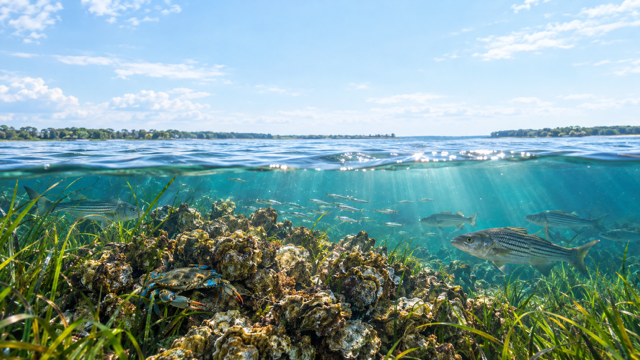
Oyster reefs create living habitats that provide food, shelter, and nursery areas for fish, crabs, and other aquatic life, strengthening the entire ecosystem.
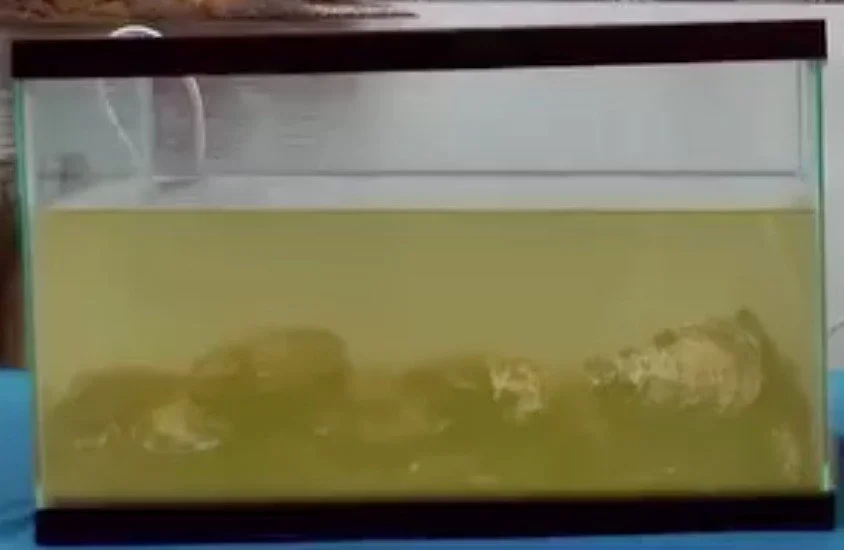
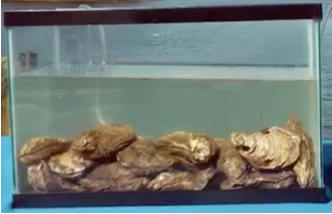
…and after 5 hours
Water from the nearby Severn River
Picture credit goes to
…just after adding 20 oysters
Why the Wye?
The Wye River is integral to our community’s quality of life. Oyster restoration can help return it to the health it once enjoyed.
What changed?
Agricultural runoff, fertilizers, stormwater, animal waste, and leaking septic systems can introduce excess nutrients, bacteria, and sediment into the river. Combined with oyster losses from disease and historical harvesting, these pressures have weakened water quality and the river’s natural filtering capacity.
The Wye needs our help
Data collected on the Wye River, and the Upper Eastern Shore more broadly, show that these tributaries have some of the worst health in the Chesapeake Bay Watershed. ShoreRivers’ 2024 and 2025 Report Cards document ongoing water-quality challenges, including nutrient pollution and poor water clarity. The University of Maryland Center for Environmental Science’s 2026 Chesapeake Bay & Watershed Report Card reinforces this assessment and highlights the need for continued restoration.
Established in 2010, the Wye River Oyster Sanctuary covers approximately 3,510 acres, including 1,100 acres of historic oyster bottom that once supported 23 distinct reefs. Harvesting is prohibited, creating an opportunity for oyster populations and reef habitat to recover.
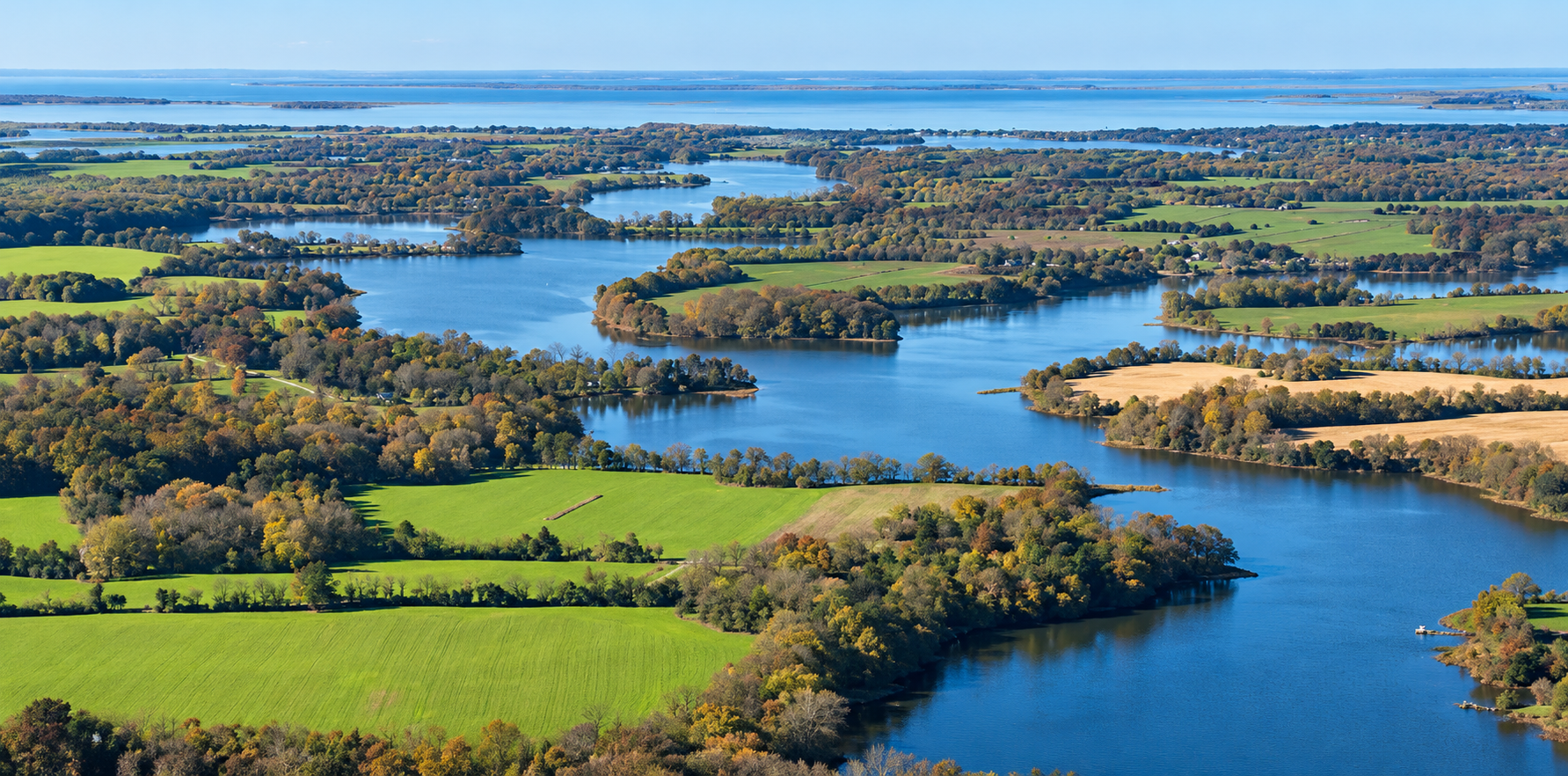
The Wye River was once known for abundant oysters and underwater grasses.
Much of the Wye is an Oyster Sanctuary
Frequently Asked Questions
-
Our oyster larvae are grown in a lab. Once they reach a certain size, they are exposed to oyster shells where some permanently attach to the host shell and begin to grow, at which point they are “spat-on-shell”. The number of spat that attach will vary, but usually range from 10 to 20.
-
Every donation directly supports oyster restoration in the Wye River.
A $100 donation helps plant more than 30,000 oysters, with the potential to filter approximately 60,000 gallons of water per day at maturity.
A $1,000 donation helps plant more than 300,000 oysters, with the potential to filter approximately 600,000 gallons of water per day at maturity.
How are these estimates calculated?
Our estimates assume a 10% survival rate from spat on shell to maturity, with each surviving adult oyster filtering approximately 20 gallons of water per day.
These figures represent estimated potential filtration capacity as actual results vary depending on oyster survival, growth, and environmental conditions.
-
In 2025, our “Founding Funders” were friends and neighbors who came together to help us launch the program. We raised enough in individual donations to purchase and plant one barge of oyster SOS. In 2026 we were able to fund 3 barges, each containing over 20M SOS. Two barges were funded by community members and one funded largely from support from Queen Anne’s County. For 2027 and 2028, we have been awarded a grant from the National Fish and Wildlife Foundation that will not only fund one barge of SOS in each year but will support our development of a reef monitoring program. We will continue to seek grant support from additional sources, with a portion of that funding dedicated to capacity building for our program, primarily focused on improving our ability to perform reef assessments and communicate results. Our goal is for donations from the community to grow to fund planting of 3 barges in 2027. Community Support is critical to attracting grant funding, as most of our grantors prioritize support of Community-driven programs, requiring significant matching funds from the community. By leveraging community funding through grants, your individual donation is worth more and accelerates the restoration timeline.
-
Given the vast size of the Wye River Oyster sanctuary, 3510 acres of which 1,100 is historic oyster bottom (23 historic bars), we expect it may be 8 to 10 years before we can declare victory and call the Wye Sanctuary’s oyster beds fully restored. With your help and continued efforts by organizations including the MD DNR, Chesapeake Bay Foundation, Oyster Recovery Partnership and others, we believe that through existing reefs, new plantings, and natural recruitment (reproduction), full restoration is possible within this time frame (see definition outlined by the Oyster Metrics Workgroup). In the near term, we will focus on improvements in the health of each oyster reef we plant and measures of water quality.
-
Yes. WROP is committed to monitoring its restoration efforts through both pre-planting and post-planting assessments.
Pre-planting monitoring establishes baseline conditions, while post-planting monitoring evaluates oyster survival, growth, population density, and overall reef health.
Working with experienced restoration partners, WROP will use these findings to measure restoration success and guide future planting efforts.